


Night Diving: What Comes Out After Dark
After dark the reef changes shift: corals open, parrotfish sleep in mucus, morays and lionfish go hunting. Who to look for at night, and how to dive it safely.
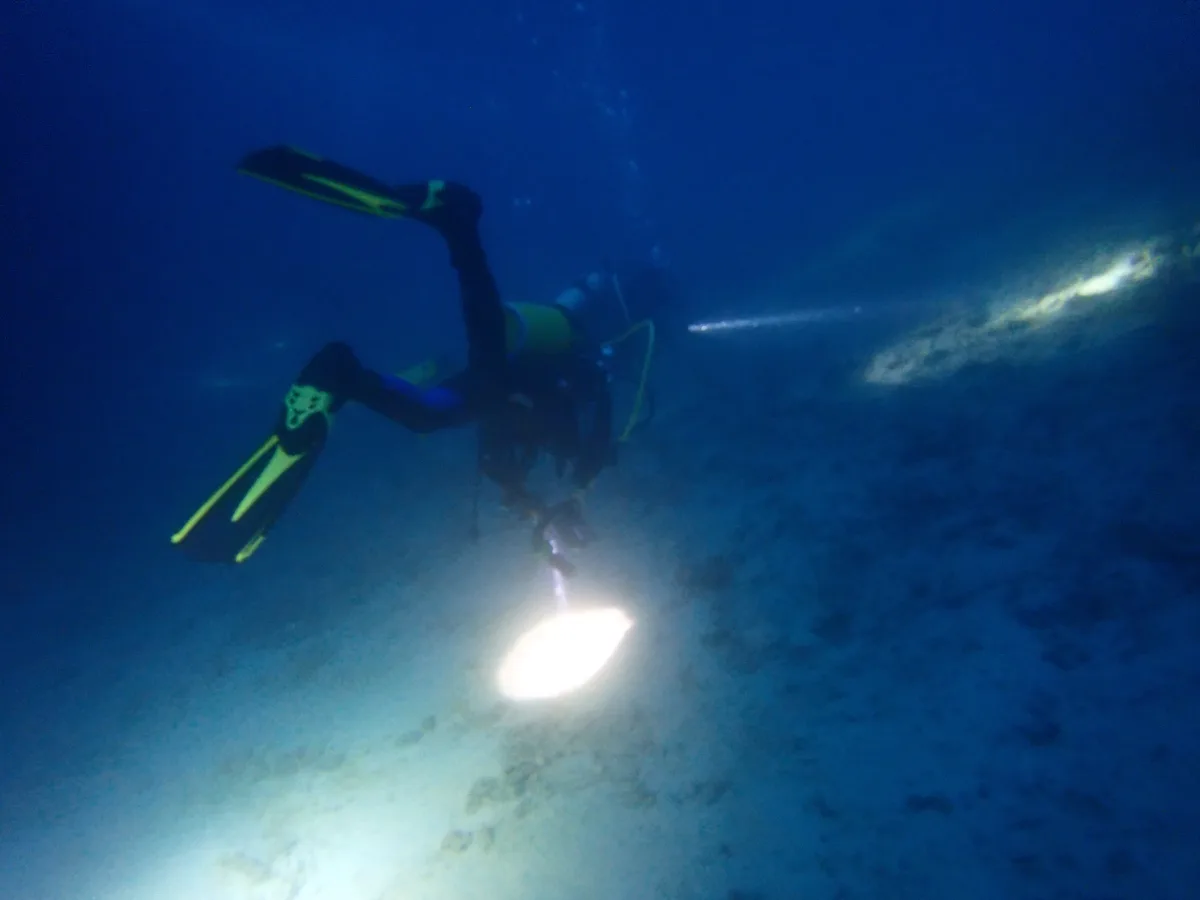
You roll in at dusk with your torch on, and the reef you dived this morning has become a different place. The fish you photographed a few hours ago are tucked away, and animals you never saw are out hunting. Here is who changes shift after dark, and how to dive the night safely.
The night shift
Marine life behaves differently after dark, and different creatures and behaviours take over, writes James Wagner in DAN's Alert Diver magazine (2024). Even the reef itself changes. Most corals feed at night, according to NOAA's Florida Keys National Marine Sanctuary: the polyps come out of their skeletons and stretch out long, stinging tentacles to catch tiny drifting animals. By day, most reef-building corals live largely on sugar made by tiny algae inside them, called zooxanthellae, which need sunlight. A reef that looks like stone at noon can look soft and fuzzy in your torch beam.
Who goes to sleep
Many of the colourful daytime grazers turn in for the night. FishBase describes the Stoplight Parrotfish as strictly active by day, spending the night sleeping on the bottom. Some parrotfish go one step further and wrap themselves in a cocoon of mucus before they settle. A study by Lexa Grutter and colleagues at the University of Queensland, published in Biology Letters in 2010, tested what the cocoon is for: parrotfish without one were attacked more by gnathiids, tiny blood-feeding parasites the researchers compared to mosquitoes. The cocoon works like a mosquito net.
Who wakes up
- Morays. Many morays hide in holes by day and are more active at night, as our moray eel post explains. FishBase notes that the Green Moray feeds mainly at night.
- Porcupinefish. FishBase describes the Spotted Porcupinefish as solitary and active at night, hunting sea urchins, sea snails and hermit crabs. Our pufferfish post explains why you should never make one puff up.
- Lionfish. By day the Red Lionfish hides head down and practically motionless, says FishBase. At night it hunts small fish, shrimps and crabs, using its wide pectoral fins to trap prey in a corner before swallowing it in one go.
- Sweetlips and drums. The Harlequin Sweetlips rests under ledges or in caves by day and feeds at night on crustaceans, molluscs and fish. The Spotted Drum hides under ledges by day and feeds at night on crabs, shrimps and worms (FishBase).
- Sea urchins. SeaLifeBase notes that the Long-spined Sea Urchin hides in crevices, especially in strong light, and grazes algae at night. Watch where you put your hands and knees.
Lights in the water
Turn your torch away for a moment and the water itself can sparkle. Bioluminescence, light made by living things through a chemical reaction, is relatively rare on land but common in the sea, according to NOAA Ocean Exploration. It is most common in fish, squid and soft-bodied drifting animals such as jellyfish and comb jellies, and most of the light is blue, because blue travels best through water.
Some divers go further and dive blackwater: drifting at night over deep open water, beside a lit line hanging from the boat that draws in tiny larval and drifting animals. In DAN's Alert Diver (2017), photographer Mike Bartick says it should be taken seriously and advises a bailout plan in case a diver drifts out of sight of the line.
Night diving on ScubaSnap
Several of the night shift have pictures on ScubaSnap: the Green Moray Eel, the Spotted Porcupinefish, the Red Lionfish, the Harlequin Sweetlips, the Spotted Drum, the Long-spined Sea Urchin and the sleeping Stoplight Parrotfish. For blackwater, our directory lists the Pelagic Blackwater Night Dive in Hawaii. Took a picture by torchlight? The AI fish identifier works on night photos too, as long as the animal is sharp and well lit.
Diving safely at night
Carry a backup light on every night dive. DAN says a backup makes sure you are not left in complete darkness if your main light fails.
- Dive it by day first. DAN advises getting to know the site in daylight if you can, noting landmarks such as large rocks or coral heads.
- Agree on signals before you descend. You and your buddy should agree on hand and light signals before the dive, stay close, and check in often (DAN). Lights of similar strength help you get each other's attention.
- Be seen at the surface. DAN suggests a surface marker buoy that can take a light. From a boat, a strobe at the bottom of the ladder shows divers where the boat is.
- Go easy on the animals. Green Fins advises limiting strong lights, because they stress marine life. Take your look, then move the beam on, and never touch a sleeping fish. Our eight habits of reef etiquette apply at night too.
The short version
- Corals open up and feed at night
- Parrotfish sleep, some inside a mucus cocoon that keeps parasites off
- Morays, porcupinefish, lionfish, sweetlips, drums and urchins come out to feed
- Cover your torch and look for bioluminescence
- Carry a backup light, know the site, agree on signals, and be seen at the surface
Sources and further reading
- Night Diving (James Wagner, DAN Alert Diver, 2024): lights, signals, buddy contact and surface safety.
- Blackwater Diving (Mike Bartick, DAN Alert Diver, 2017): what blackwater diving is and how to plan for it.
- Coral Reefs (NOAA Florida Keys National Marine Sanctuary): corals feeding at night, and their algae.
- What is bioluminescence? (NOAA Ocean Exploration).
- Fish sleep more soundly when they have a mosquito net (University of Queensland, 2010): the parrotfish mucus cocoon study in Biology Letters.
- FishBase species pages: Stoplight Parrotfish, Red Lionfish, Harlequin Sweetlips, Spotted Drum and Spotted Porcupinefish; SeaLifeBase: Diadema setosum.
- Managing Photographers (Green Fins): lights, strobes and marine life.