


Nudibranch vs. Sea Slug: How to Spot the Difference Underwater
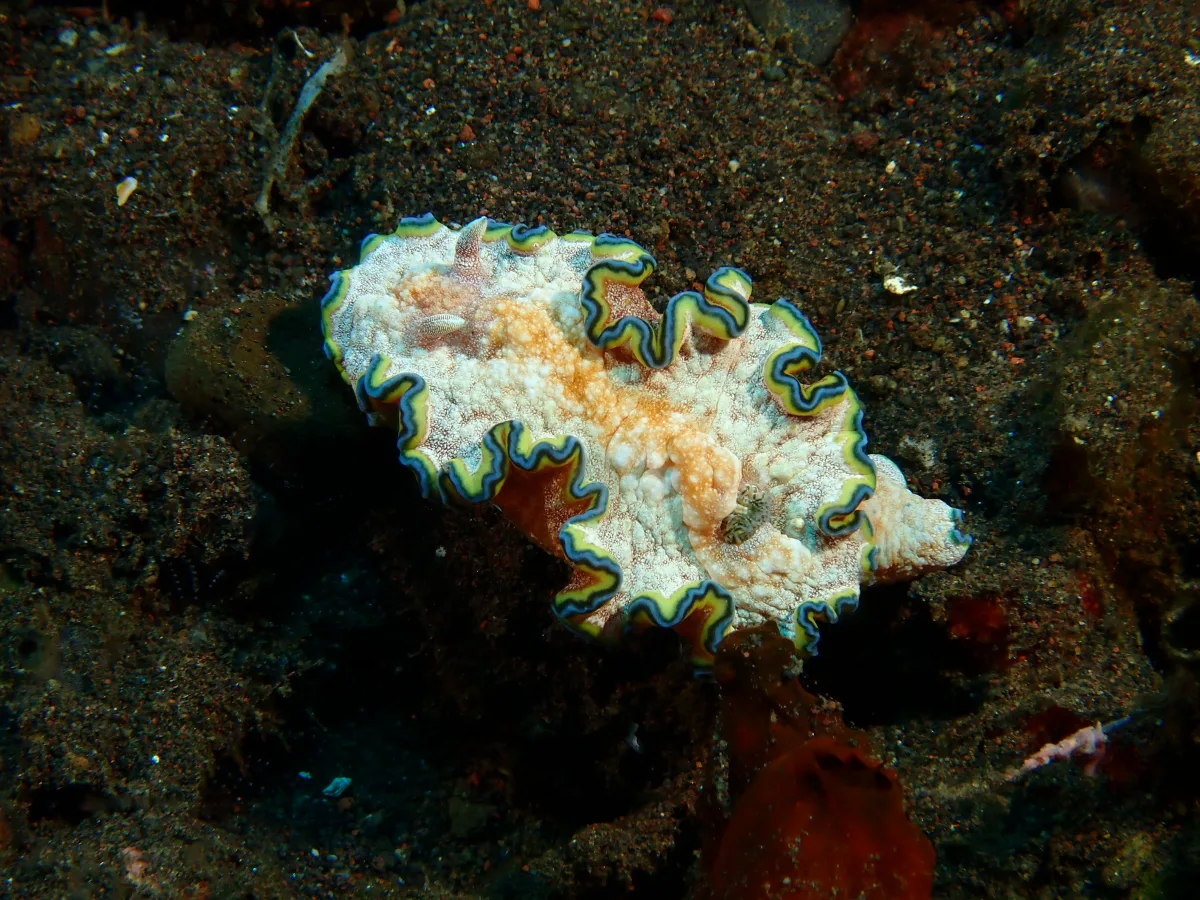
You spot a vibrant burst of neon blue and yellow crawling across a sponge, with a pair of delicate, feather-like tentacles gently swaying at its front. You call it a nudibranch, your dive buddy calls it a sea slug, and both of you are right—partly. Understanding what sets these soft-bodied marvels apart makes macro diving even more rewarding.
All nudibranchs are sea slugs, but not all sea slugs are nudibranchs
The term "sea slug" is a broad bucket that includes thousands of marine gastropods that have reduced, internal, or completely lost shells. Nudibranchs are one specific order within this group. The name comes from Latin and Greek meaning "naked gill," which points directly to their defining feature: their breathing organs are completely exposed on the outside of their bodies, without any shell or mantle cavity to hide them.
What a nudibranch is
There are over 3,000 described species of nudibranchs, inhabiting oceans worldwide from shallow tropical reefs to icy polar waters. They are carnivorous mollusks, feeding on sponges, hydroids, bryozoans, soft corals, and even other sea slugs. Adults completely shed their embryonic shells, leaving behind a soft, flexible body. Most species are hermaphroditic—possessing both male and female reproductive organs—though they still require a partner to mate and lay intricate ribbon-like egg coils on the reef.
Naked gills and chemical sensors
Nudibranchs rely on specialized anatomical structures to navigate their world. At the head end sit two prominent tentacles called rhinophores, which act as chemical scent receptors to detect food sources and mates in the water current. Broadly, divers encounter two main forms:
- Dorid Nudibranchs: Typically broad and flattened, with a visible, feather-like tuft of gills surrounding the anus on their lower back (such as Chromodoris species).
- Aeolid Nudibranchs: Slender bodies covered in dozens of finger-like projections called cerata. These cerata act as gills and digestive branches, and some species use them to store active stinging cells (nematocysts) harvested directly from the hydroids they eat.
Other sea slugs divers often confuse with nudibranchs
Not every soft, colorful reef crawler is a true nudibranch. Here are a few other sea slug groups you will encounter on dives:
- Headshield Slugs (Cephalaspidea): Burrowing slugs with flattened heads designed for digging through sand, often retaining small internal shells (like Chelidonura species).
- Sap-Sucking Sea Slugs (Sacoglossa): Herbivorous slugs that feed on algae, including famous "solar-powered" species like the leaf sheep (Costasiella kuroshimae) that retain living chloroplasts from algae to gain energy from sunlight.
- Sea Hares (Aplysiomorpha): Larger, soft-bodied grazers with ear-like tentacles and soft internal shell plates, capable of releasing a purple ink cloud when disturbed.
Bright colors as a warning system
Lacking protective shells or swift swimming speed, nudibranchs rely on striking, high-contrast coloration—a defense strategy known as aposematism. These brilliant reds, purples, oranges, and blues signal to fish and crustaceans that the slug is toxic, foul-tasting, or packed with stowed stinging cells.
Nudibranchs and sea slugs on ScubaSnap
Macro divers and species spotters have logged numerous nudibranch and sea slug species across our global directory. Here are a few popular highlights:
- Varicose Wart Slug: a hardy dorid nudibranch with blue-grey ridges, yellow-capped bumps, and toxic skin secretions that deter reef predators.
- Willan's Chromodoris: a striking Indo-Pacific species featuring translucent white rhinophore tips, dark blue stripes, and a bright mantle border.
- Spanish Shawl: an eastern Pacific aeolid nudibranch with a purple body, neon orange cerata, and scarlet rhinophores.
Browse all macro slug encounters in our nudibranch list in the species guide. Captured a close-up photo of tiny rhinophores on your last dive? Upload your macro shot to the AI fish identifier.
Diving around sea slugs
Never touch, lift, or move a nudibranch from its host organism. They possess extremely delicate body tissues, and removing them from their specific food source (like a particular sponge or hydroid colony) can cause fatal stress.
- Master your buoyancy. Hover comfortably above the reef substrate or wall when getting low for macro photography, ensuring your fins never crush surrounding coral or hydroid colonies.
- Focus on the rhinophores. When photographing nudibranchs, ensure your camera's focus point sits sharply on the front rhinophore tentacles rather than the back gills.
- Watch your lighting angle. Position video lights or diffusers at a slight side angle to highlight body translucency and fine physical textures without blowing out bright highlights.
The short version
- All nudibranchs are sea slugs, but not all sea slugs are nudibranchs
- "Nudibranch" means "naked gill," referring to exposed respiratory structures
- Rhinophores detect chemical scents to locate prey and mates
- Separated into dorids (feathery rear gills) and aeolids (finger-like cerata)
- Bright colors serve as an warning sign to reef predators
- Never touch them and keep focus sharp on the rhinophores when photographing
Sources and further reading
- The Sea Slug Forum (Australian Museum): comprehensive database on nudibranch biology, taxonomy, and behavior.
- MolluscaBase: global taxonomic registry for gastropods and marine invertebrates.
- Responsible Reef Photography Guidelines (Divers Alert Network): advice on protecting marine life during macro photography.